
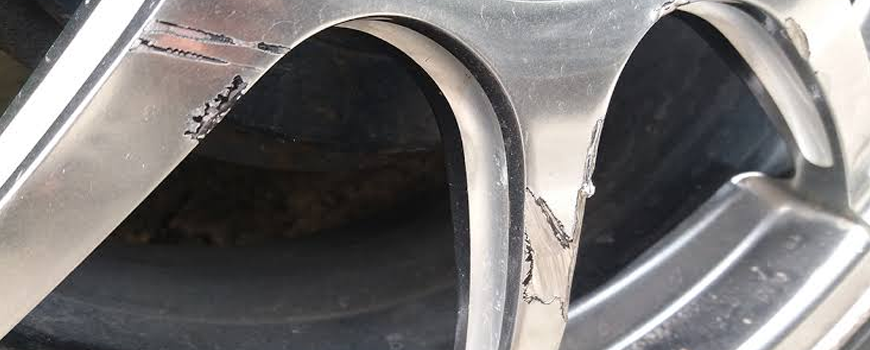
Alloy wheels can withstand substantial road loads, but they are not immune to damage. A hard impact with a pothole, contact with a kerb or driving over a road defect at speed can deform or crack a wheel. Damage can also develop gradually when repeated impacts place stress on the wheel.
The difficult part is determining whether the damage is cosmetic or structural. A scratch in the finish may only affect appearance, while a bent or cracked wheel can affect tyre seating, air pressure and vehicle behaviour. This is where professional inspection matters.
How Do Alloy Wheels Get Damaged?
Pothole impacts are one of the most common causes. When a tyre drops into a deep pothole and strikes its edge, the wheel can experience a sudden impact load. Depending on the severity and angle of the impact, the rim may bend, crack or develop damage around the bead seat.
Kerbs create a different type of impact. Turning into or parking against a kerb can scrape the outer lip of the wheel, causing what is commonly called kerb rash. A harder collision can deform the rim rather than merely damaging its finish.
Road debris can also cause damage. Metal objects, stones or other hard materials can strike the wheel while driving. The likelihood and severity of damage depend on the object’s size, speed and point of impact.
Incorrect tyre pressure can increase vulnerability as well. A significantly underinflated tyre provides less protection between the wheel and road surface, increasing the possibility of wheel damage during a severe impact.
What Does a Bent Rim Actually Mean?
A bent rim is more than an appearance problem.
The wheel needs to maintain a suitable shape so that the tyre can seat correctly and retain air. A significant deformation can contribute to vibration, uneven tyre contact or persistent air loss.
A driver may notice a steering vibration that becomes more apparent at certain speeds. Repeated loss of tyre pressure can also indicate a problem with the wheel, tyre or their sealing interface.
However, these symptoms are not proof of a bent rim. Tyre defects, wheel imbalance, alignment problems and suspension issues can produce similar symptoms.
When Can Rim Repair Help?
Professional Rim repair Sharjah can be appropriate when the wheel has repairable deformation or surface damage and its structural condition remains suitable for repair.
For example, a wheel with a repairable bend may be assessed and, where appropriate, restored using specialised equipment. Cosmetic damage may require a different process involving surface preparation, repair and refinishing.
The repair method depends on the wheel’s material, construction, damage location and severity. A reputable technician should inspect the wheel before deciding whether repair is appropriate.
When Should a Damaged Rim Be Replaced?
Not every damaged wheel should be repaired.
A severely cracked wheel, extensive structural deformation or damage in a critical area may make replacement the safer option. The manufacturer’s specifications and the wheel’s construction should also be considered.
Attempts to repair damage without proper assessment can create additional risks. A professional should determine whether the wheel can be restored to a condition suitable for continued service.
This is particularly important for alloy wheels because their material properties and manufacturing methods vary. A repair technique suitable for one wheel may not be appropriate for another.
Why You Should Not Ignore Air Loss
One of the clearest reasons to have a damaged wheel inspected is repeated tyre pressure loss.
If a tyre is correctly fitted and continues to lose pressure, the cause could involve a puncture, valve problem, tyre bead issue or damage to the wheel. A damaged bead seat can prevent an effective air seal between the tyre and rim.
Driving repeatedly with low tyre pressure can also affect handling, tyre wear and heat generation. The tyre should therefore be inspected rather than repeatedly inflated without finding the underlying cause.
What Should You Check After a Severe Impact?
If your vehicle hits a deep pothole or kerb heavily, pay attention to changes that appear afterward. New vibration, steering changes, repeated pressure loss or visible wheel deformation justify an inspection.
Do not assume that the absence of visible damage means the wheel is unaffected. Some deformation may be difficult to identify without proper equipment.
A workshop can remove the wheel and inspect its condition more thoroughly than a visual check performed beside the road.
Choosing Rim Repair in Sharjah
When looking for Rim repair in Sharjah, do not select a service based solely on price.
Ask whether the technician will inspect the wheel before repairing it, whether the equipment is suitable for the wheel type and whether the service includes appropriate checks after the repair.
The important question is not simply, “Can you repair this rim?”
It is:
“Can you determine whether this wheel can be safely repaired and verify its condition after the work?”
Repair or Replace? Let the Damage Decide
Alloy wheel damage can range from superficial kerb marks to deformation that affects tyre sealing and wheel performance. The appropriate solution depends on the location, severity and type of damage.
If your wheel has suffered a significant impact, developed a persistent air leak or started producing unusual vibration, professional inspection is more appropriate than guessing whether the damage is serious.
A properly assessed Rim repair Sharjah service can restore suitable repairable damage, while a wheel that is structurally compromised may need replacement.
The goal should never be to repair a wheel at any cost. The goal is to determine whether the wheel can be safely restored and returned to service.